
Apple (AAPL), which is currently going through a bad phase amid falling overseas sales, reported better than expected earnings and revenues for the first quarter despite a further sharp decline in the sales of iPhone. The tech giant’s stock gained in the in after-hours on Tuesday following the announcement.
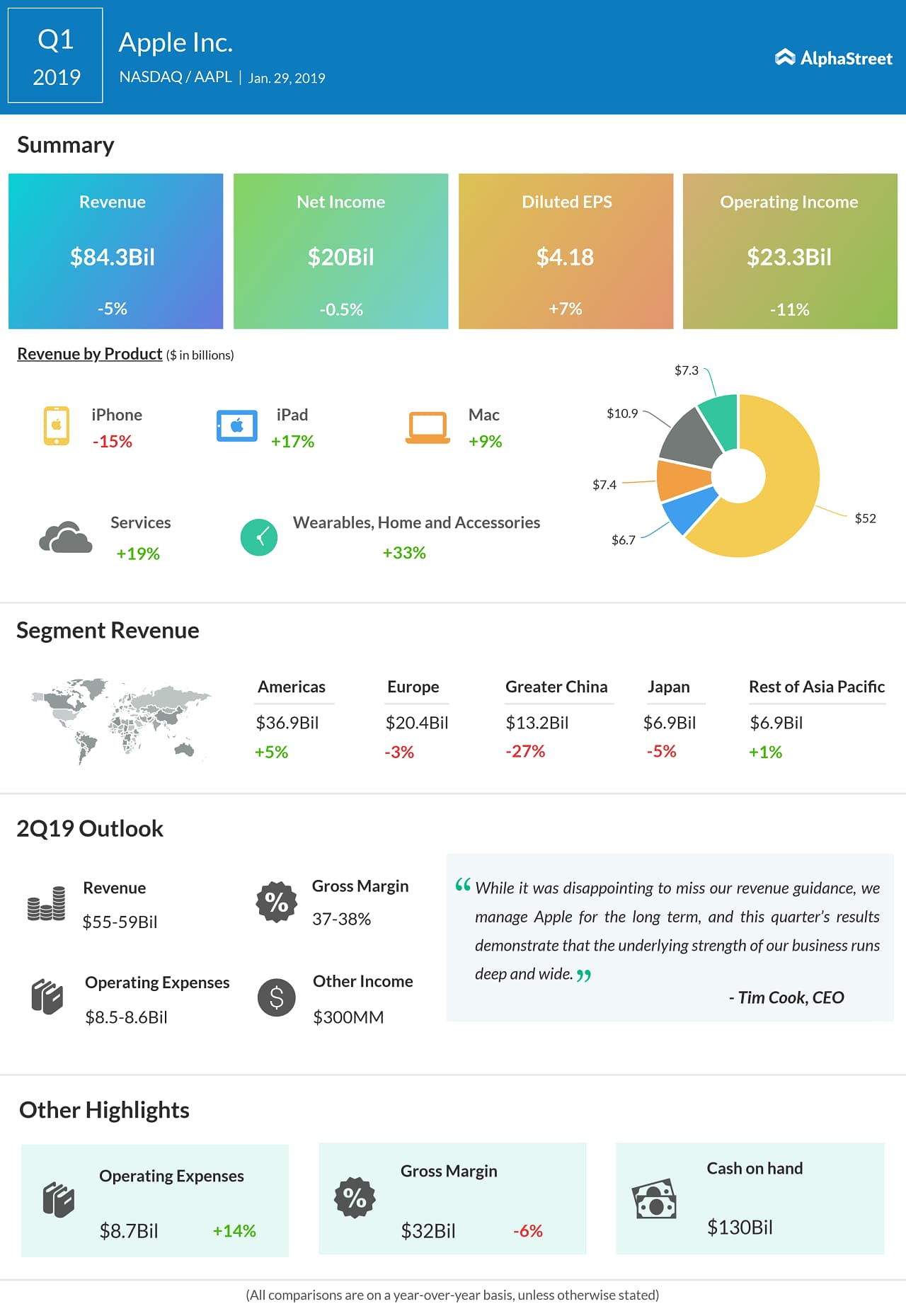
First-quarter earnings rose to $4.18 per share from $3.89 per share in the corresponding period of 2018 and topped analysts’ forecast. While the increase in earnings per share is mainly attributable to a variation in the share count, net income was broadly flat at $20 billion.
Sales of the Cupertino, California-based company dropped 4.5% annually to $84.3 billion but came in above the Wall Street estimates. Restricting the overall top-line performance, iPhone sales fell 15% and slightly missed the street view, while the other product categories including iPad and Mac maintained the positive momentum. Services revenue jumped 19% to an all-time high of $10.9 billion.
iPhone sales fell 15%, while the other product categories including iPad and Mac maintained the positive momentum
Region-wise, Apple continues to face strong headwinds in China, mainly from the country’s softening economy and the ongoing trade war. While all the major overseas markets witnessed contraction, sales increased in the Americas.
“While it was disappointing to miss our revenue guidance, we manage Apple for the long term, and this quarter’s results demonstrate that the underlying strength of our business runs deep and wide,” said CEO Tim Cook.
Also see: Apple Q1 2019 Earnings Conference Call Transcript
For the second quarter, Apple forecasts revenues in the range of $55 billion to $59 billion and gross margin between 37% and 38%. The revenue forecast, however, falls short of market expectations. The management is looking for operating expenses of $8.5-$8.6 billion and other income of $300 million for the March quarter.
The sales of iPhone, Apple’s flagship product that accounts for about 60% of its total revenue, has been on a downward spiral for the past several months, triggering stock selloffs that continue to squeeze the company’s market value.
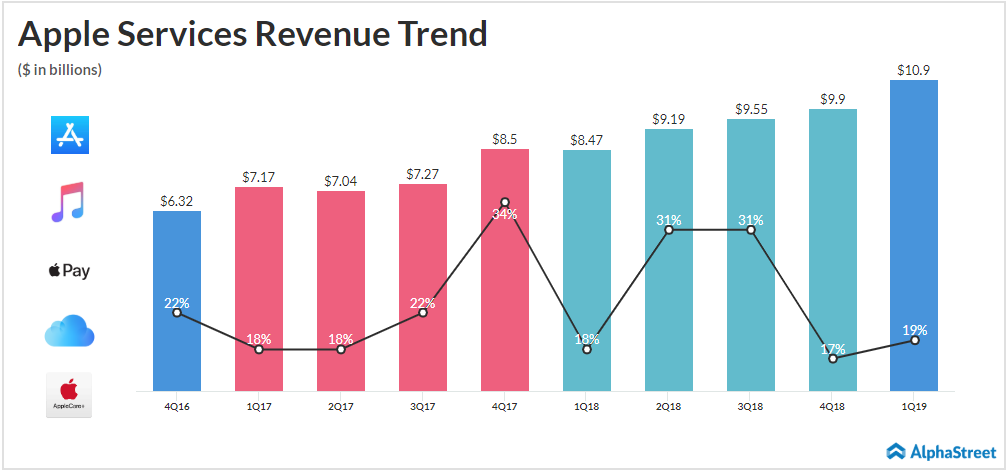
As per its new reporting structure, Apple stopped providing unit sales numbers from the December quarter and started including gross margin numbers of the services and products segments.
After suffering miserably in the latter part of last year, Apple shares started 2019 on a positive note but remained sluggish. The stock has lost about 31% since hitting a record high in mid-2018.