
CarMax, Inc. (NYSE: KMX) got an unexpected push after the coronavirus outbreak and the used car retailer entered the fast lane as the widespread disruption and financial uncertainties made people prefer pre-owned vehicles to brand-new ones. But things have changed since markets started reopening and the demand for new vehicles recovered. Currently, CarMax is going through a rough patch, with sales and margins coming under pressure amid high borrowing costs and macro headwinds.
Stock
The stock price has fallen about 50% since hitting an all-time high more than one-and-half year ago. But it regained momentum in the last quarter and the uptrend continued ahead of this week’s earnings. Nevertheless, customer confidence is at a record low, and market conditions are not in favor of the company which is struggling with weak selling prices and low volumes. Another factor that makes the stock less attractive as a long-term investment is the relatively high valuation.
“The current challenges in the used auto industry are well documented. With affordability pressured by broad inflation, climbing interest rates, tightening lending standards, and prolonged low consumer confidence. We are continuing to leverage our strongest assets, our associates, our experience in our culture to build momentum and manage through this cycle. While there are many macro factors that we cannot control, we have taken deliberate steps to support our business both the near-term and the long run,” said CarMax’s CEO Bill Nash a few months ago.
The management is currently working to better align expenses with sales to save margins, while also taking measures to attract customers. Recently, the company introduced its finance requalification product in the U.S. It also launched a new mobile-friendly vehicle details page to enhance the wholesale experience. Being much bigger than the new-vehicle market, the long-term prospects of the used car business remain as promising as ever. Purchasing habits of young buyers are shifting in favor of the used car market, thanks to the conveniences and transparency brought about by digital technologies.
Estimates for Q1
CarMax is all set to announce first-quarter 2024 results on June 23, at 6:50 am ET. After reporting unimpressive results for the fourth quarter, it is estimated to have continued the weak performance in the early months of the year. Analysts’ consensus forecast indicates that earnings nearly halved to $0.79 per share in the three months ended in May 2023. The primary reason behind the decline is an estimated 19% decrease in revenues to $7.53 billion.
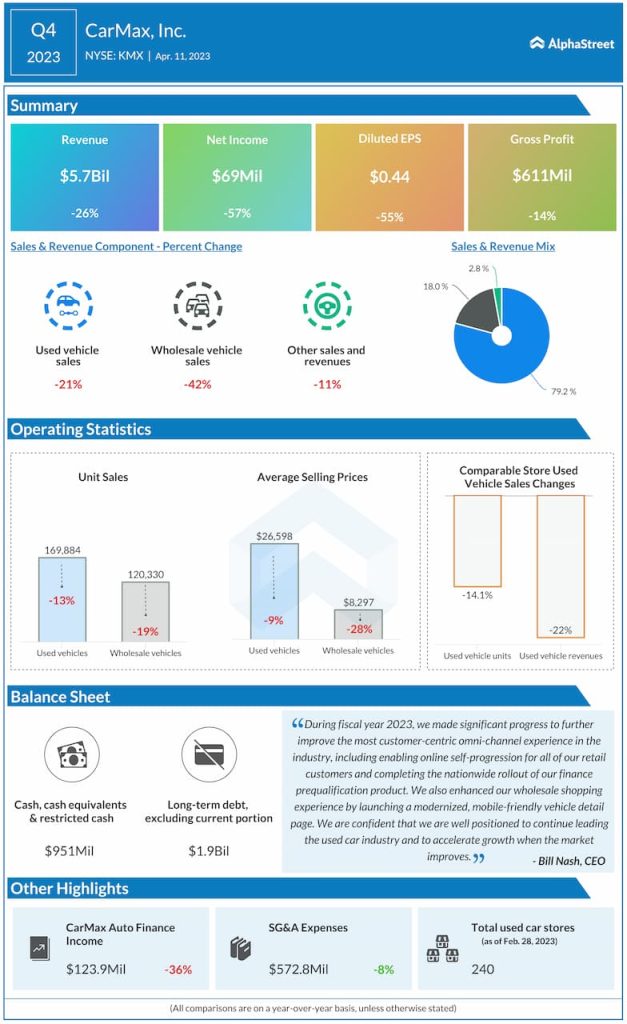
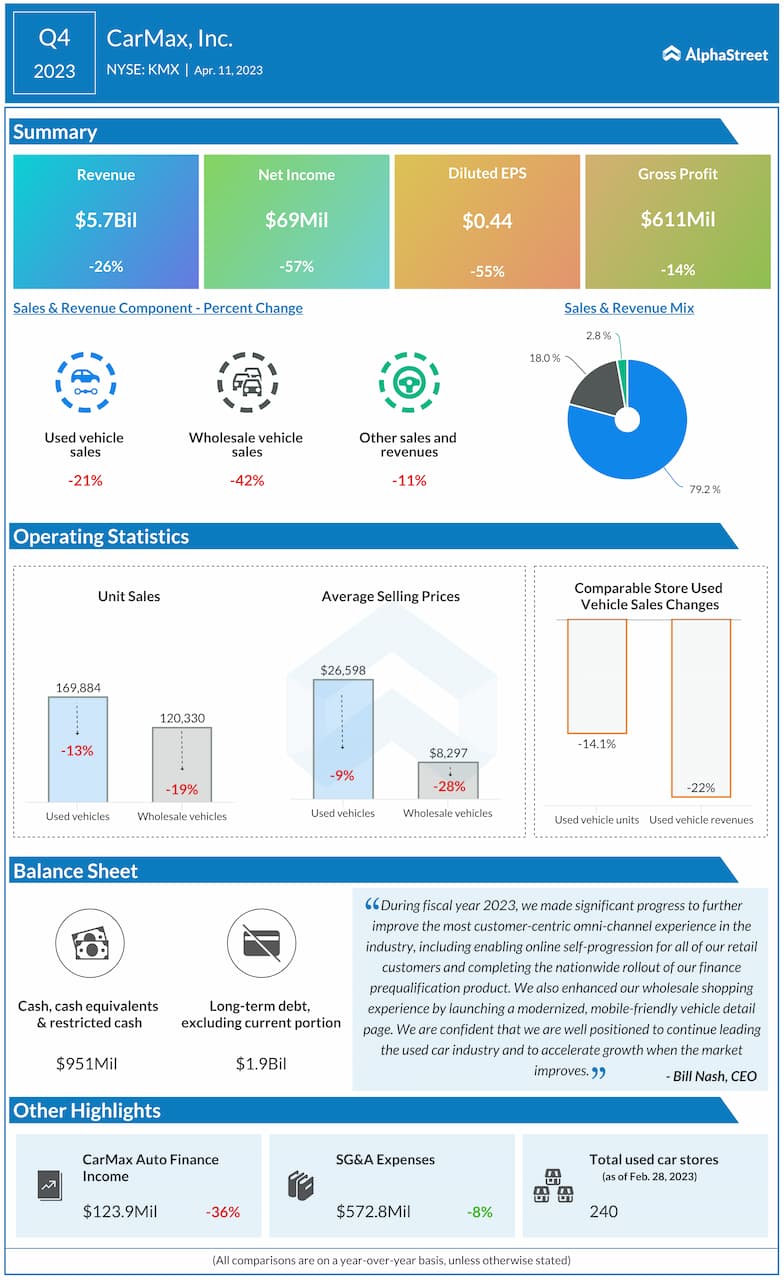
The company’s performance, compared to the market’s projections, has not been consistent in the recent past. In the February quarter earnings topped expectations after four misses in a row. Meanwhile, revenues fell short of expectations, as they did in the previous two quarters. At $0.44 per share, first-quarter profit was down 55% year-over-year.
Weak Results
The bottom line was negatively impacted by a marked decline in average selling prices. All operating segments, including the main Used Vehicle Sales division that accounts for about 80% of revenues, contracted in double digits, resulting in a sharp fall in revenues to $5.7 billion. The comparable store used vehicle unit sales and revenues dropped 14.1% and 22%, respectively.
KMX has grown 31% in the past six months, though it experienced weakness in mid-March and slipped into a five-month low. It opened Monday’s session slightly below $80.