

Telefonaktiebolaget LM Ericsson (NASDAQ: ERIC, OMX Stockholm: ERIC B) is a global telecommunications and technology company providing integrated network infrastructure, software, and services that enable connectivity across mobile operators, enterprises, and industry digitalization efforts. Ericsson’s portfolio includes radio access networks (RAN), cloud-native network software, automation and digital services, enterprise and mission-critical networking solutions, and intellectual property licensing. The company emphasizes innovation, operational resilience, and strategic positioning amid evolving global connectivity trends — including 5G, cloud services, and AI-enabled network transformation.
Operational Environment & Performance Context
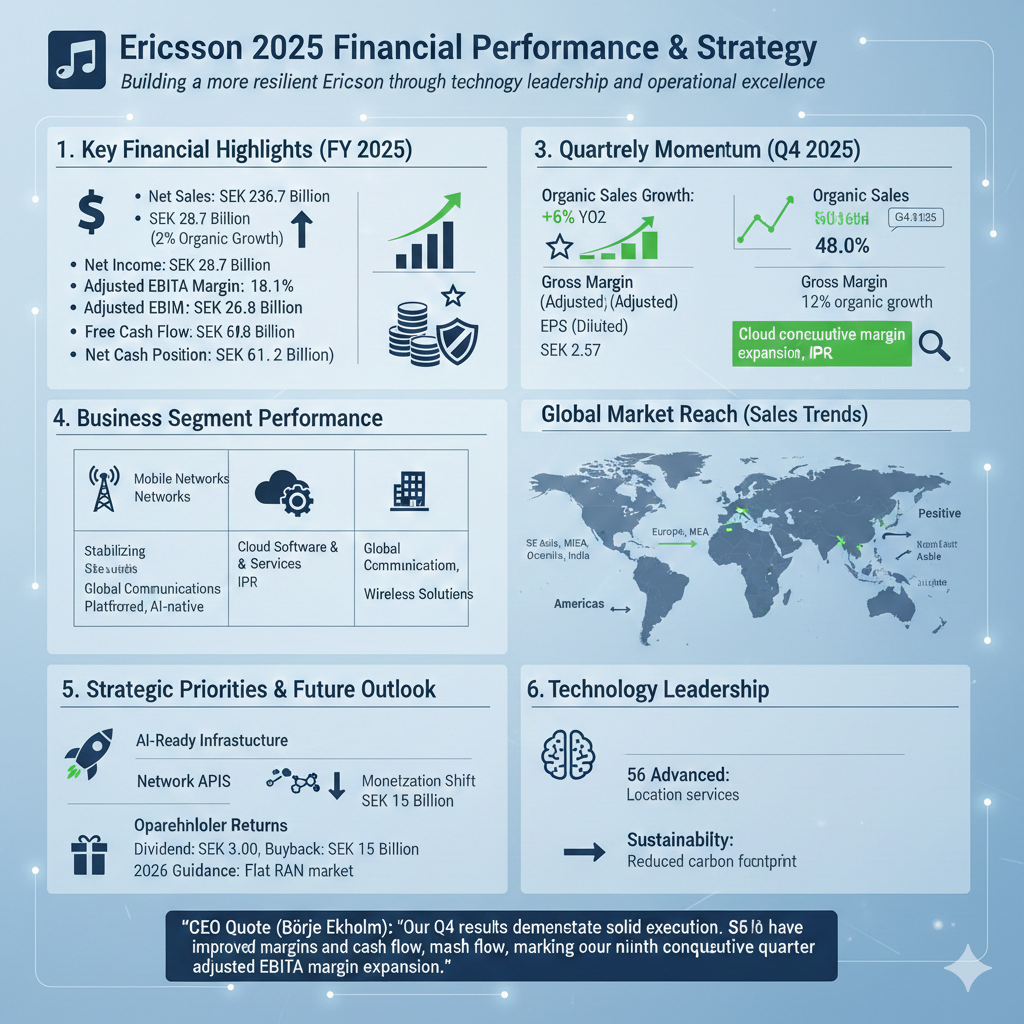
During 2025, Ericsson reported continued organic growth in a generally flat radio access network (RAN) market. For the full year, organic sales increased, driven by growth in Networks and Cloud Software and Services segments. In Q4 2025, organic net sales grew, with all three major segments contributing, while reported sales showed a decline due to currency headwinds and portfolio adjustments. The company delivered a ninth consecutive quarter of year-over-year adjusted EBITA margin expansion, reflecting disciplined execution on strategic priorities and operational efficiency improvements across geographies.
Product & Technology Positioning
Ericsson continued to expand its software-enabled and platform-led offerings aligned with customer demand for high-value network solutions. Key emphases included:
- Cloud Software & Services Growth: Achieved strong growth in Q4 2025, with enhanced core network capabilities across all markets, contributing to improved adjusted margins.
- Network Automation and AI-Enabled Capabilities: Investments continued in AI-native network automation, supporting emerging connectivity use cases and operational efficiencies across mobile and enterprise domains.
- Energy-Efficient RAN and Next-Gen Platforms: The portfolio targets energy efficiency and performance differentiation, helping customers reduce total cost of ownership while addressing sustainability goals.
These product trends align with Ericsson’s view of an era of “hyperconnectivity” where network performance, software integration, and automation are strategic differentiators.
Strategic Execution & Priorities
Ericsson reinforced its dual focus on sustaining technology leadership and enhancing operational discipline. Management highlighted ongoing cost optimization and structural efficiency actions, which helped improve margins even as reported sales were affected by currency and portfolio headwinds. The company continues to extend R&D efforts in software, automation, cloud connectivity, and next-generation mobile platforms, ensuring strategic alignment with evolving customer requirements.
Market Dynamics & Organizational Commentary
In the context of broader industry dynamics, Ericsson noted that core network and enterprise-oriented demand provided stability amid flatter traditional network spending. Management emphasized proactive supply chain planning and supplier partnerships to mitigate volatility in key components like semiconductors. Organizational streamlining and workforce efficiency were presented as long-term enablers of execution effectiveness while maintaining technical capability to serve complex global customers.
Mergers & Strategic Investments
Ericsson maintained a selective approach to M&A and strategic investments. While there were no significant large-scale acquisitions in 2025, management outlined prioritization of strategic technology partnerships and targeted inorganic investments to strengthen long-term capabilities, especially around cloud-native and automation offerings. Share buybacks and an increased dividend proposal reflect a balanced capital allocation strategy, leveraging strong cash generation and net cash position for shareholder value and selective investment.
Competitive Positioning
Ericsson positions itself not just as a network equipment supplier but as a software and services-enabled connectivity partner. The company emphasizes integrated solutions that support mobile broadband, enterprise connectivity, and mission-critical enterprise applications. This positioning differentiates Ericsson through performance, software depth, and a broad portfolio that spans traditional RAN, core network, cloud services, and automation platforms.
Credit & Financial Flexibility Outlook
Ericsson’s strong free cash flow generation, robust net cash position, and disciplined capital allocation support a positive credit profile and financial flexibility. The company’s ability to propose a dividend increase and significant share buyback, even amid flat external market spending, reflects confidence in its operational resilience and strategic execution.
Geographical Performance & Expansion Trends
Ericsson’s organic sales growth in Q4 2025 was driven by regional differences: Europe, Middle East, Africa, South East Asia, Oceania, and India delivered strong increases, while North East Asia showed a decline. Americas performance remained broadly stable. Expansion efforts focus on strengthening infrastructure in high-demand markets while maintaining operational efficiency globally.
Government Engagement & Industry Collaboration
Ericsson continues strategic engagement with government and regulatory initiatives to support national digital infrastructure goals, network security standards, and public-sector connectivity programs. Collaborative efforts with policymakers on spectrum policy, cybersecurity frameworks, and digital transformation initiatives help align Ericsson’s technology capabilities with wider connectivity objectives — particularly in markets advancing 5G and beyond.
Market Outlook & Connectivity Trends
Looking forward, Ericsson expects the RAN market to remain largely flat in the near term but anticipates growth in mission-critical networks, enterprise connectivity, and segments enabled by AI and cloud integration. The company continues to invest in technology leadership and operational efficiency, supporting its ability to serve diverse customer segments in an increasingly software-centric and automated connectivity landscape.
Bottom Line
Q4 and full-year 2025 demonstrate Ericsson’s ability to maintain steady growth in a flat spending environment while enhancing profitability through operational efficiency. The company continues to strengthen its product portfolio, pursue selective partnerships and acquisitions, expand geographically with strategic focus, and engage with governments on digital infrastructure initiatives. Operational resilience, geographic diversification, and long-term strategic priorities — including AI-driven networks and automation — continue to guide Ericsson’s role in the future of global connectivity.