
PricewaterhouseCoopers (PwC) in its Global Media and Entertainment Outlook in 2019 predicted that the US Over-the-top (OTT) video market size in 2023 would be $23.7 billion, in terms of revenue. The Subscription Video on Demand’s (SVOD) share is expected to go up from 68.7% to 75.2% by 2023 due to the rising popularity of streaming services. The COVID-19 outbreak has catalyzed the pace at which we would see these numbers.
Accelerating demand
As more people shelter at home and live events are cut down, online streaming platforms are the easy go-to entertainment source for everyone. Members all of a sudden have a lot of leisure to spend time watching shows and enjoy a higher bang for the buck of their subscription fees.
[irp posts=”58921″]
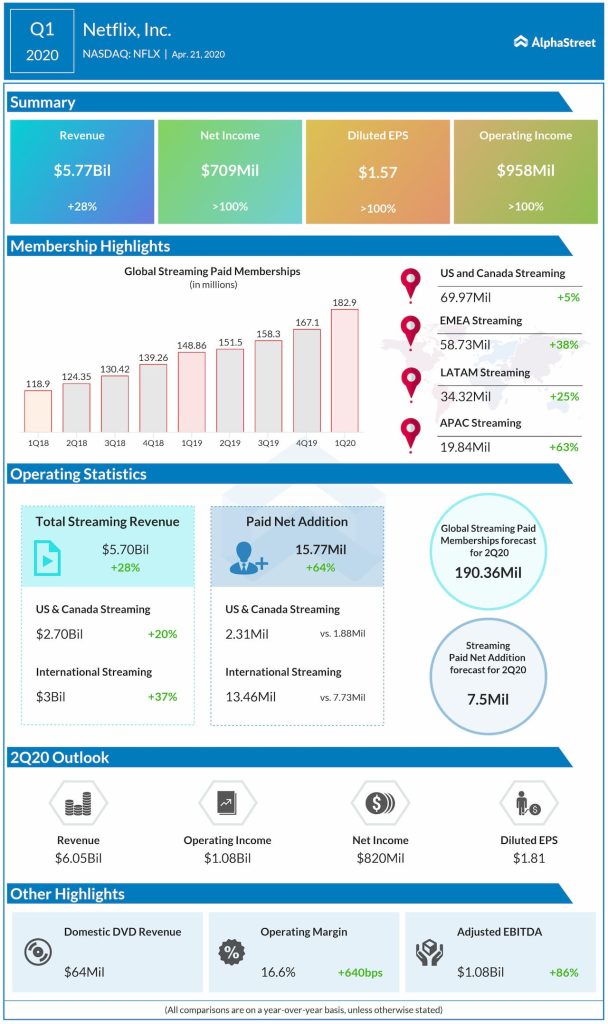
Demand for new SVOD subscriptions has shot up like never before. The new streaming companies are going to take a bite of the market leader, Netflix’s (NASDAQ: NFLX) pie going forward. Netflix’s market share at 91% in 2007 fell to 19% in 2019 and might fall to 18% this fiscal, as per Ampere Analysis projections. Nonetheless, Netflix saw new subscriptions shoot up by 15.8 million (almost 10% of its current global subscriber base) in Q1 2020.
The pandemic came as an unintended jackpot to the new player Disney+ which launched in November 2019. Within three months of its launch, it overshot the number of subscribers Hulu had by half a million and touched 50 million subscribers by the start of April. Demand is likely to be sticky post the crisis and keep the revenue stream sustained.

Production Suspended
What is slightly
upsetting for the players and viewers alike, is the production shutdown due to
the pandemic. However, Netflix, in its letter to shareholders in Q1 2020 mentioned,
“We benefit from a large pipeline of
content that was either complete and ready for launch or in post-production
when filming stopped.” This comes as a pacifier for Netflix subscribers.
The other players are yet to share information about their content pipeline.
The production delays might push the cash expenses for the future and keep the
free cash flows of these companies higher for the quarter.
Regardless, people would continue binge-watching and keep the demand for new content upbeat. Companies might feel the pinch when they run out of new content to keep their members engaged.
[irp posts=”57777″]
Looking Ahead
In the long term, there seems to be a permanent shift in the integration of digital technology in the lives of people across socio-economic classes. The streaming service companies would be the ultimate beneficiaries. A recent work by Digital TV Research quantifies this. The number of SVOD subscribers in the US is estimated to go up to 307 million in 2025, from 199 million in 2019 which is almost a 55% increase.
According to a PwC survey, one of the prime reasons for customers canceling their subscriptions is ‘lack of wide enough selection of content’ or ‘new content not refreshed often enough’.
The challenge for streaming players going forward would be to cater to a diverse set of audiences with varied preferences. The online streaming industry might be seen coming out of the COVID 19 crisis with creative content to retain their customer base.
For more insights, read Netflix Q1 2020 earnings transcript here.
(Written by Manjula S)