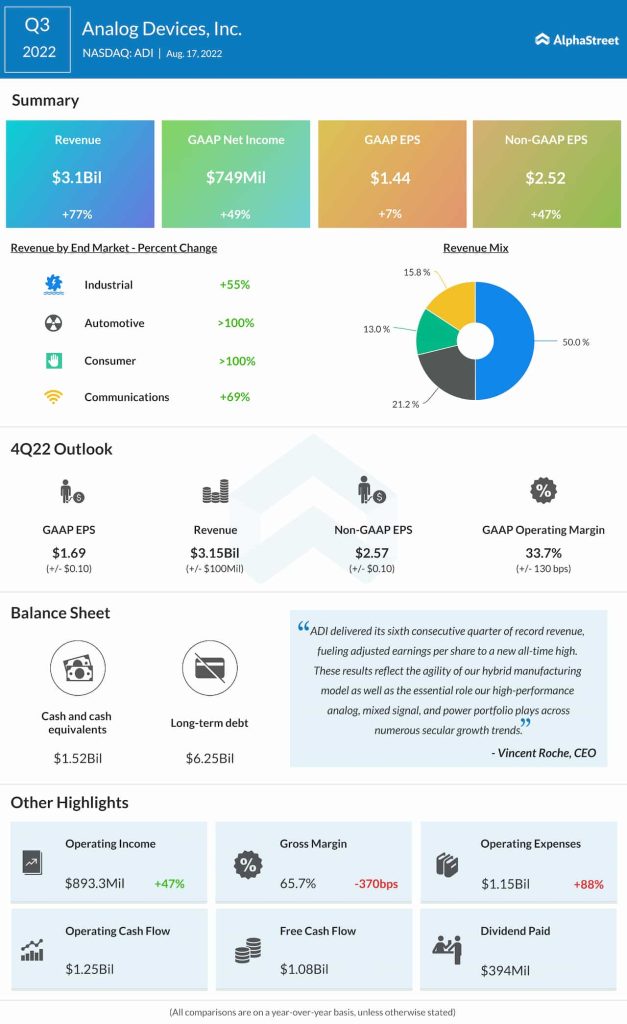
Analog Devices, Inc. (NASDAQ: ADI) reported a double-digit increase in third-quarter revenues and adjusted profit. The chipmaker also provided guidance for the fourth quarter of 2022.
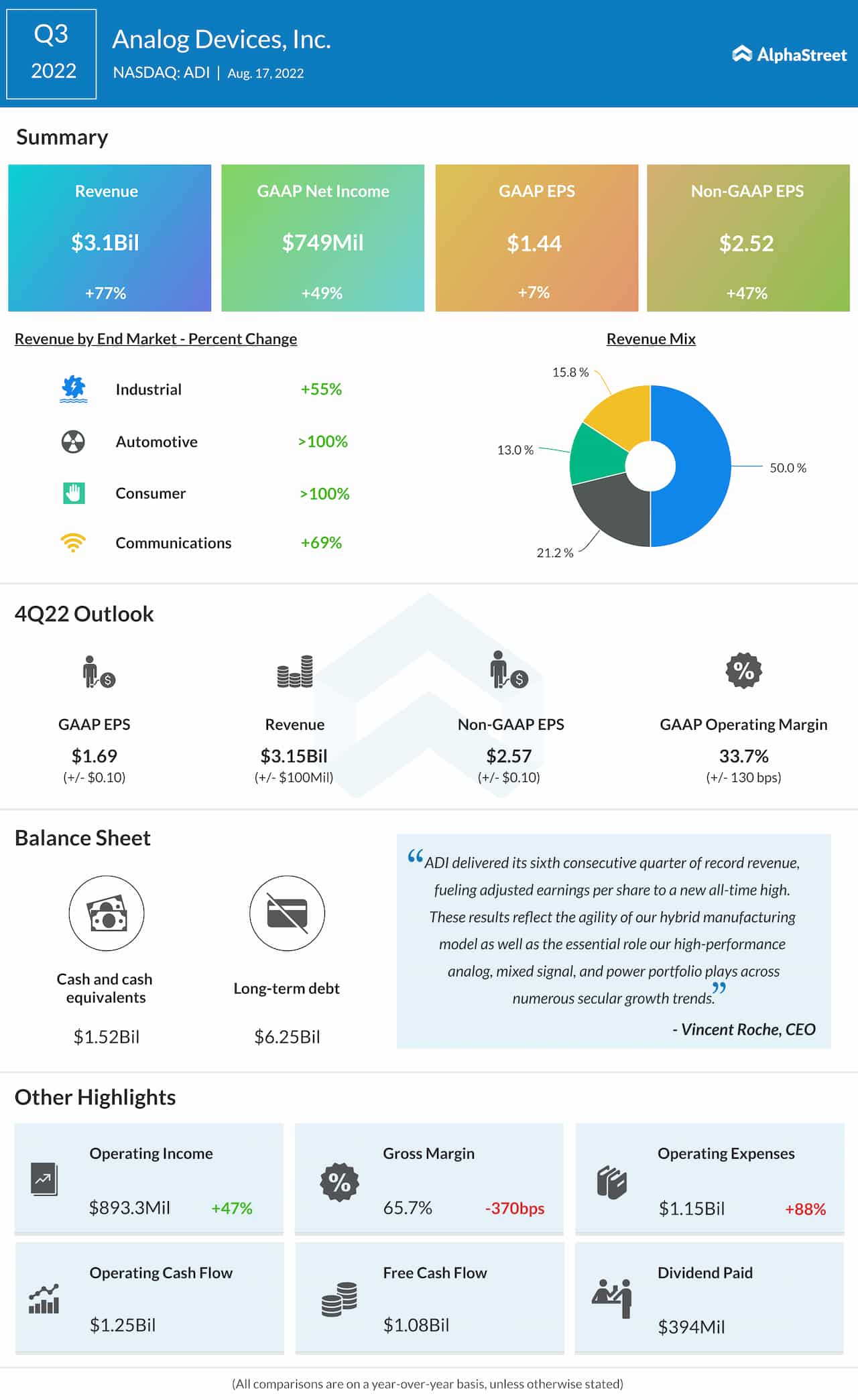
Third-quarter earnings, excluding special items, climbed to $2.52 per share from $1.72 per share in the comparable period of 2021. On a reported basis, net income was $749 million or $1.44 per share, compared to $503.3 million or $1.35 per share last year.
Driving the earnings growth, total revenues surged 77% annually to $3.10 billion. All four operating segments registered strong growth, with the Automotive and Consumer divisions performing exceptionally well.
Check this space to read management/analysts’ comments on Analog Devices’ Q3 2022 results
“ADI delivered its sixth consecutive quarter of record revenue, fueling adjusted earnings per share to a new all-time high. These results reflect the agility of our hybrid manufacturing model as well as the essential role our high-performance analog, mixed signal, and power portfolio plays across numerous secular growth trends,” said Vincent Roche, chief executive officer of Analog Devices.