
According to Goldman Sachs, oil, gas and base commodities will position themselves as attractive investments as it forecasted a 17% returns in the coming months. The finance giant, in a report, also indicated that this week’s G20 meetup at Buenos Aires could be a turning point.
With crude oil sinking due to speculations of oversupply, metals falling due to slow growth and ripples of the impending trade war between the US and China all contributing to a disastrous November for commodities so far, analysts are of the view that some sort of resolution between the two countries is in store at the summit.

“Many of the political uncertainties weighing on commodity markets have a significant chance of being addressed in Buenos Aires,” Goldman said in the report. Analysts expect an improvement on the China-US trade standoff and greater clarity on a potential OPEC supply cut.
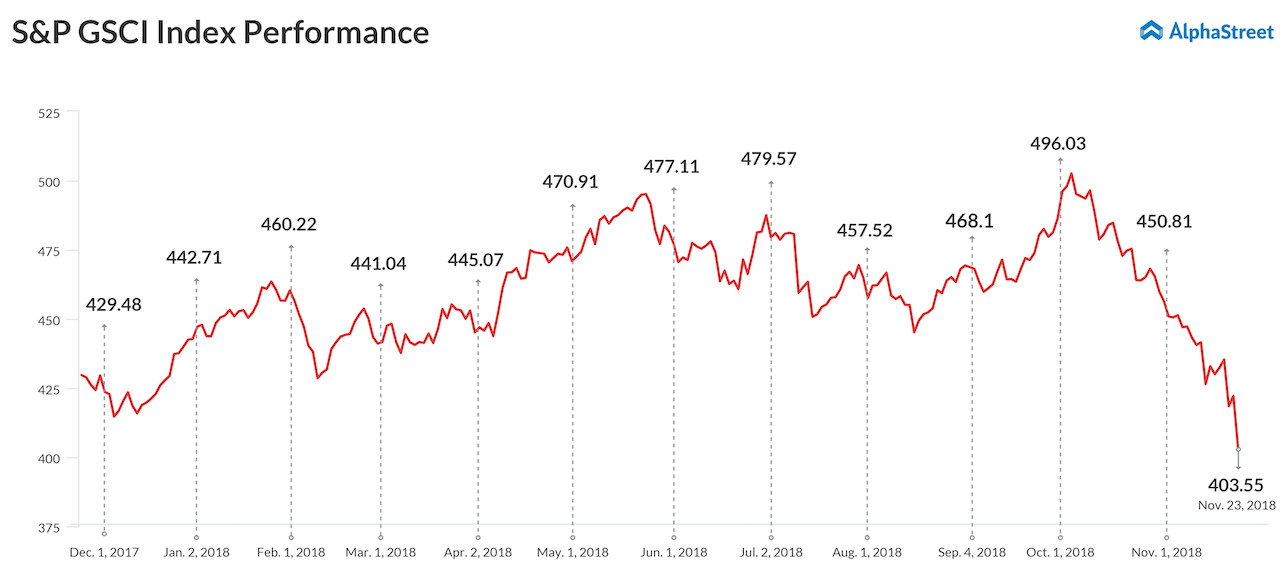
Last week, oil prices increased for the fourth session in a row on Nov 19 on reports of Saudi Arabia prospectively pushing Russia and fellow OPEC countries to cut supply by the end of the year.
Before the US markets began trading last week, Brent crude futures went up 24 cents to $67/barrel and US futures jumped 38 cents to $56.84.
Saudi Arabia is also said to be adding pressure on The Organization of the Petroleum Exporting Countries to ramp down output by 1 million to 1.4 million bpd (barrels per day) in a bid to reduce unused fuel.
According to Russian Energy Minister Alexander Novak, non-OPEC member Russia looks to sign an agreement with the group, of which the details are expected after the Dec. 6 Vienna OPEC meet.
Brent had peaked in early October at $86.74, but the record output from the United States, Russia and Saudi Arabia has hit demand.