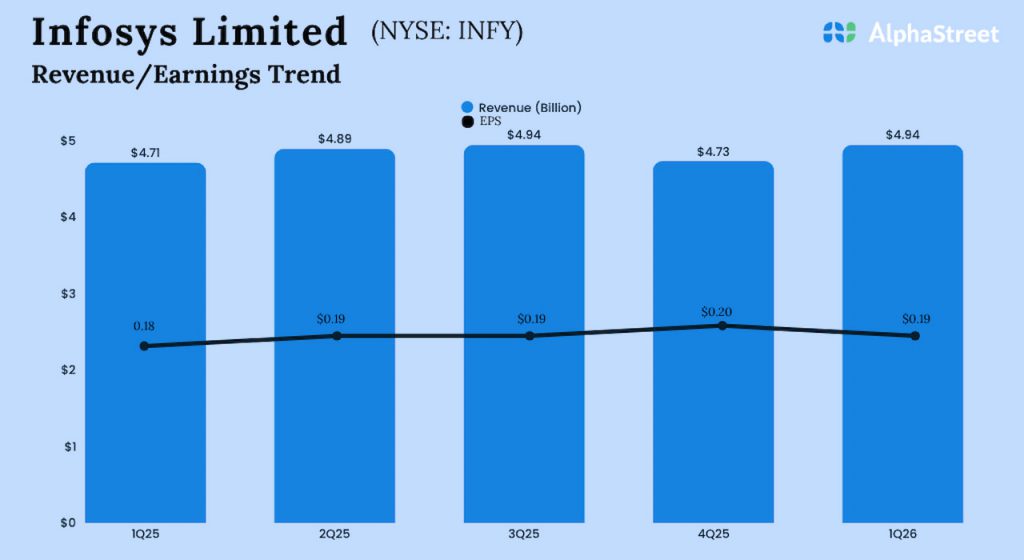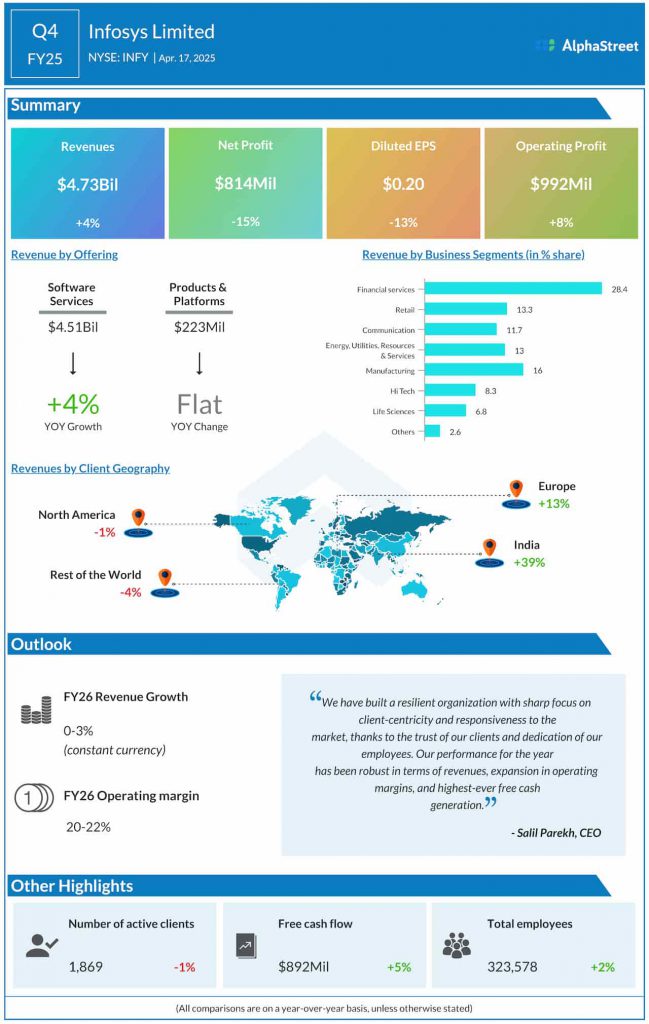
Tech giant Infosys (NYSE: INFY) on Wednesday reported an increase in revenues and earnings for the second quarter of fiscal 2026. The company also issued guidance for fiscal 2026.
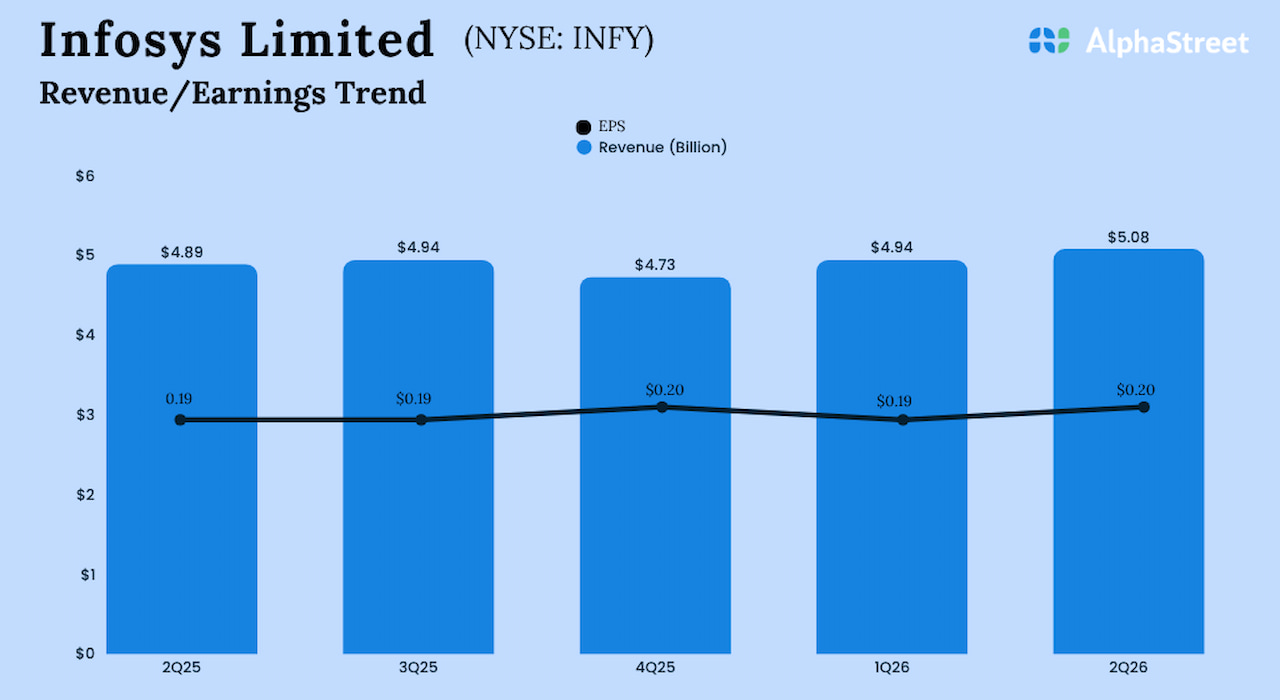
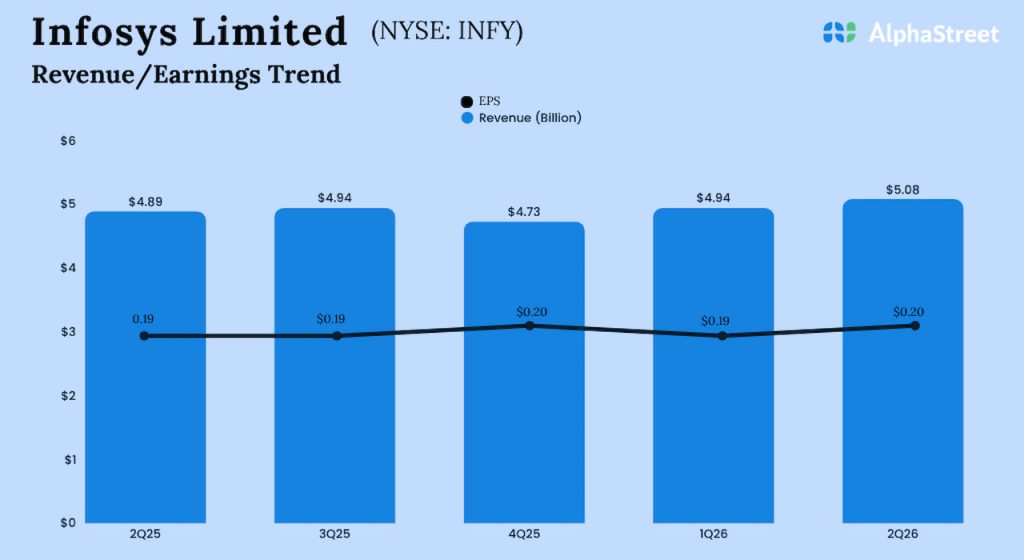
The software company’s revenues increased to $5.08 billion in the September quarter from $4.89 billion in the year-ago quarter. In constant currency, the top line grew 2.9% year-over-year.
Second-quarter net income rose to $840 million or $0.20 per share from $778 million or $0.19 per share in the corresponding period of fiscal 2025. Q2 operating margin came in at 21.0%, representing a 0.1% decline from last year and a 0.2% sequential growth.
For fiscal 2026, the management expects revenues to grow 2%-3% in constant currency. It is looking for an operating margin in the range of 20% to 22% for FY26.
“We have now delivered two consecutive quarters of strong growth, demonstrating our unique market positioning and client relevance. Strong deal wins, with 67% net new in Q2, reflect our deep understanding of clients’ priorities to deliver value from AI in this environment,” said Salil Parekh, CEO of Infosys.