Categories AlphaGraphs, Earnings, Finance
INTU Earnings: Intuit Q4 earnings rise on higher revenues, beat estimates
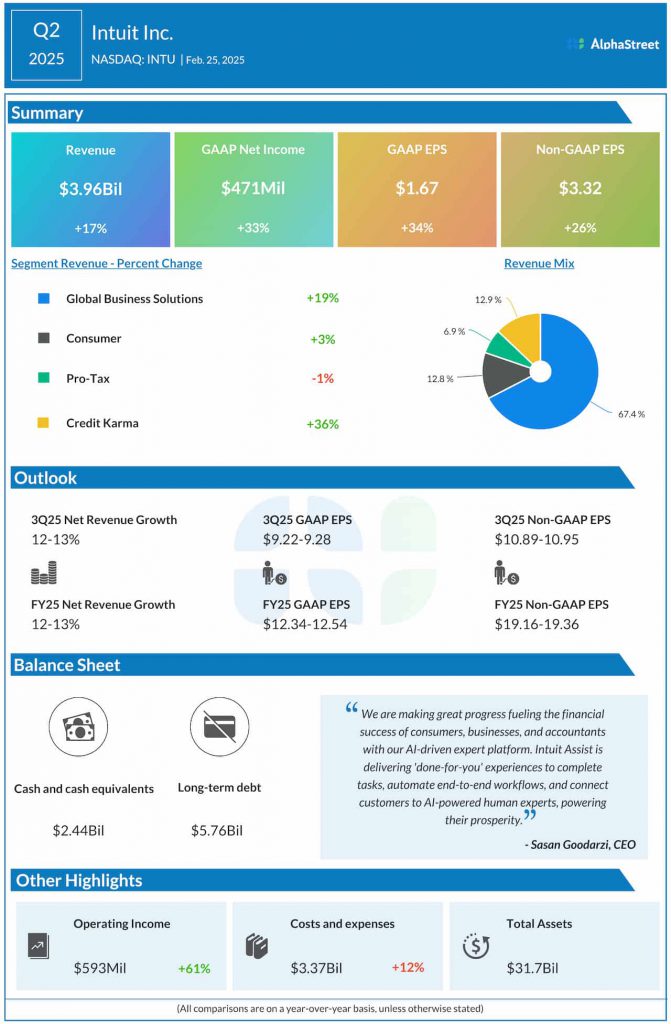
Financial technology company Intuit Inc. (NASDAQ: INTU) on Thursday reported stronger-than-expected earnings for the fourth quarter of 2025. Revenues increased 20%.
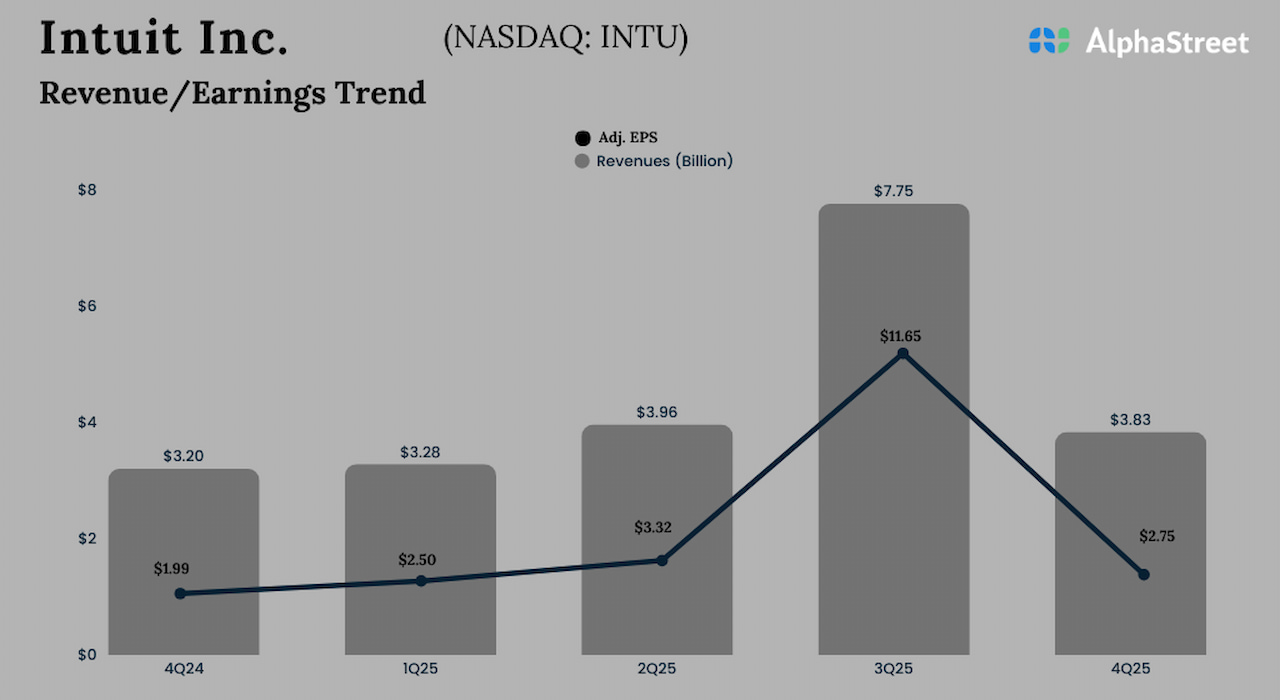
The Mountain View-headquartered company’s fourth-quarter revenue was $3.83 billion, compared to $3.18 billion in the corresponding quarter a year earlier.
On an adjusted basis, earnings came in at $2.75 per share in the July quarter, compared to $1.99 per share in the corresponding quarter of 2024. The latest number surpassed Wall Street’s forecast. On an unadjusted basis, the company reported earnings of $1.35 per share for the fourth quarter, vs. a loss of $0.07 per share last year.
“We had an exceptional fiscal 2025 with 20 percent growth in the fourth quarter and 16 percent growth for the full year. Our virtual team of AI agents and AI-enabled human experts are powering success for consumers and businesses. We could not be more excited about the opportunity ahead,” said Sasan Goodarzi, Intuit’s chief executive officer.
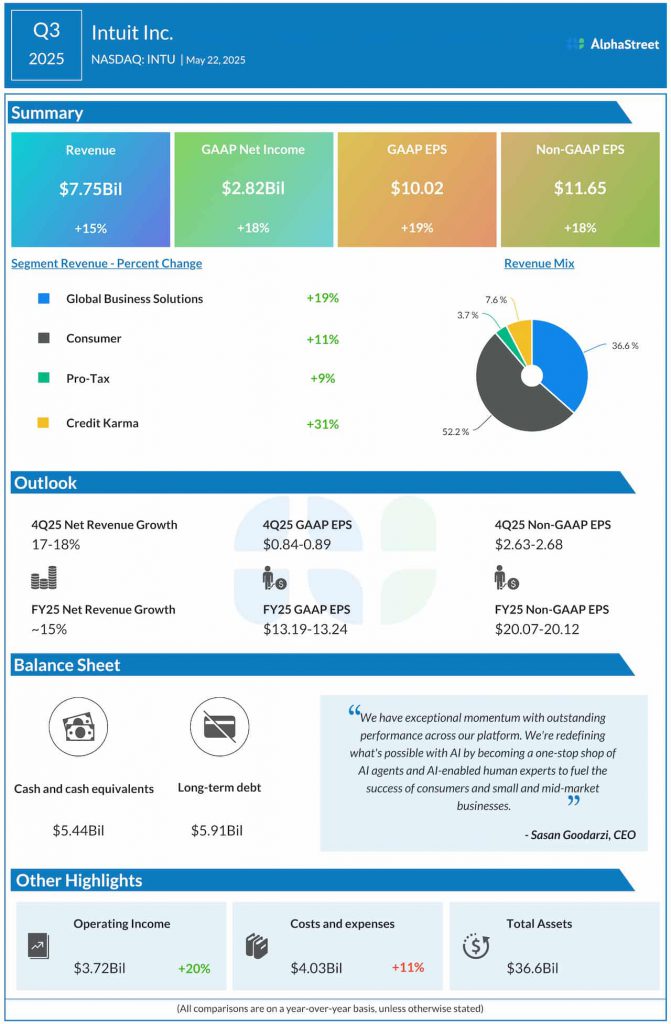
Prior Performance
Listen to the conference calls as they happen. Don't miss a beat! With AlphaStreet Intelligence, you can listen to live calls and interviews as they happen, so you never have to worry about missing out on important information.
Most Popular
Demand trends and pricing in focus as Delta Airlines gears up for Q4 earnings
Delta Air Lines is preparing to report fourth-quarter earnings, with investors closely watching how the carrier navigated ongoing cost pressures and evolving demand trends. The company's resilient performance in 2025
Lamb Weston (LW) continues to push through a dynamic environment
Shares of Lamb Weston Holdings, Inc. (NYSE: LW) stayed green on Tuesday. The stock has dropped 27% in the past three months. The frozen potato products maker continues to operate
After a rollercoaster year, is Tesla (TSLA) stock a good bet?
In recent years, Tesla's (NASDAQ: TSLA) stock has often swung between record highs and sharp corrections, reflecting shifts in investor sentiment, broader economic conditions, and changes in its financial performance.