
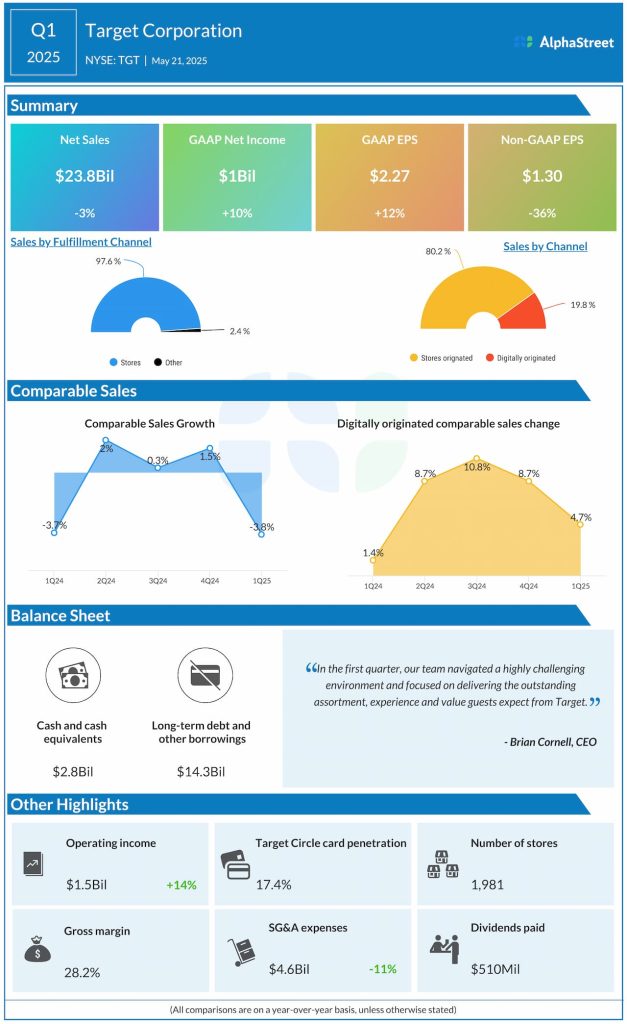
Target Corporation (NYSE: TGT) had an unimpressive start to the fiscal year, with first-quarter sales and net profit declining from last year and missing estimates. While the market environment has been challenging for the retail industry in general, Target is among the hardest hit by inflation and economic uncertainties.
When the retailer reports earnings on the morning of August 20, investors will keep a close watch on the management’s forward guidance and look for cues on its strategy to manage margins and inventory. Wall Street analysts, on average, expect second-quarter earnings to be $2.00 per share. That compares with earnings of $2.57 per share reported in the year-ago quarter. It is estimated that Q2 sales declined 2.3% YoY to $24.87 billion.
Stock Falls
Target’s stock maintained a downtrend in the first half, continuing the weakness it experienced in recent years. After slipping to a multi-year low a few weeks ago, the stock is currently struggling to get back on track. The shares have underperformed the S&P 500 so far this year. In the past 12 months, TGT has declined around 20%. The value has more than halved since hitting an all-time high in November 2021.
In the first three months of fiscal 2025, Target’s sales declined 2.8% annually to $23.8 billion. Total comparable sales decreased 3.8%, as a 5.7% dip in comparable store sales more than offset a 4.7% growth in comparable digital sales. At $1.30 per share, adjusted earnings were down 36%. Meanwhile, unadjusted net income increased 10% from last year to $1 billion; on a per-share basis, earnings rose 12% YoY to $2.27.
Results Miss
Both sales and the bottom line fell short of expectations, marking the second miss in a row. For fiscal 2025, the management expects a low-single digit decline in sales, and forecasts unadjusted earnings in the range of $8.00 per share to 10.00 per share. The guidance for full-year adjusted earnings is between $7.00 per share and 9.00 per share.
From Target’s Q1 2025 earnings call:
“As a company that’s aimed to deliver great products and outstanding value, we’re focused on supporting American families as they manage their budgets. We have many levers to use in mitigating the impact of tariffs, and price is the very last resort. Our strategy is to remain price competitive by leveraging the capabilities, long-standing relationships, the scale that sets us apart from many of our retail peers. For example, we’re fortunate to have a sourcing team with decades of experience and strong partnerships with our global suppliers.”
Challenges
Besides persistent cost pressure and macroeconomic issues, Target’s recent underperformance can also be attributed to inventory bloat and strain on cash flows. There is intense margin pressure from the new import tariffs, forcing the management to actively diversify its supplier base and explore cost-sharing strategies. Other headwinds include a deterioration in the overall customer experience and stiff competition from other retailers like Walmart and Costco.
On Tuesday, shares of Target traded slightly above $106, which is well below their 52-week average price. The stock was trading up 2.7% in the afternoon.