
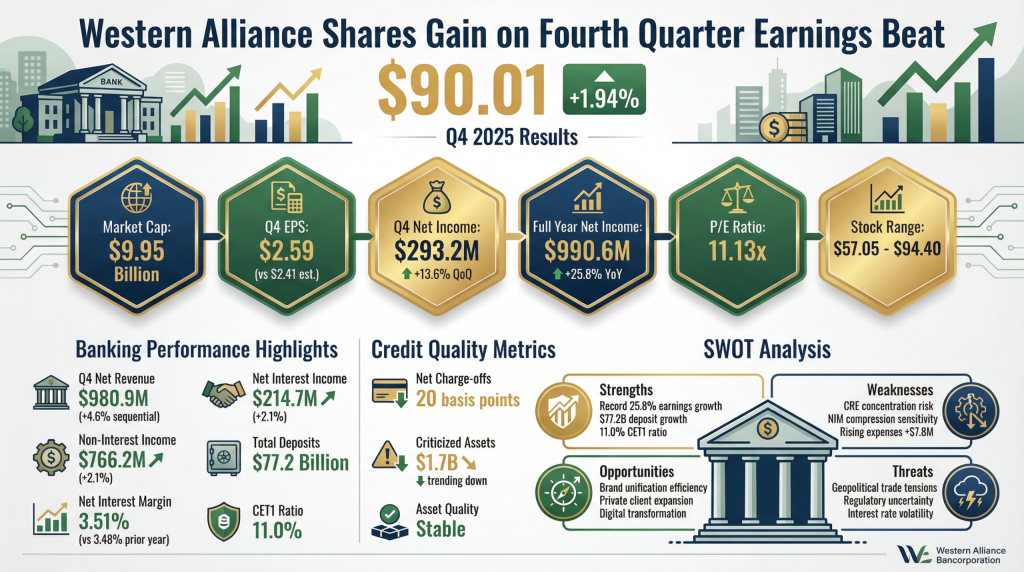
Western Alliance Bancorporation (WAL) enters 2026 with a cautious eye on geopolitical shifts and domestic trade policy. As a commercial lender with heavy exposure to the manufacturing and technology sectors through its Bridge Bank and Commercial & Industrial (C&I) divisions, the bank is indirectly sensitive to tariff escalations. Recent trade negotiations involving 49% tariffs on specific industrial imports have increased input costs for Western Alliance’s commercial borrowers, potentially impacting their debt-service coverage ratios.
The bank’s regulatory filings indicate that while it does not have significant direct foreign sovereign exposure, its clients’ supply chains are increasingly vulnerable to geopolitical fragmentation. Higher tariffs on raw materials like steel and aluminum, coupled with ongoing logistics disruptions, have led to a “criticized asset” high-water mark of $1.7 billion earlier in the year, though management noted this has begun to trend downward.
Western Alliance’s 2026 guidance assumes a stable interest rate environment but warns that further trade-related inflation could delay projected rate cuts, which would paradoxically support net interest income while increasing credit risk for smaller commercial borrowers.