
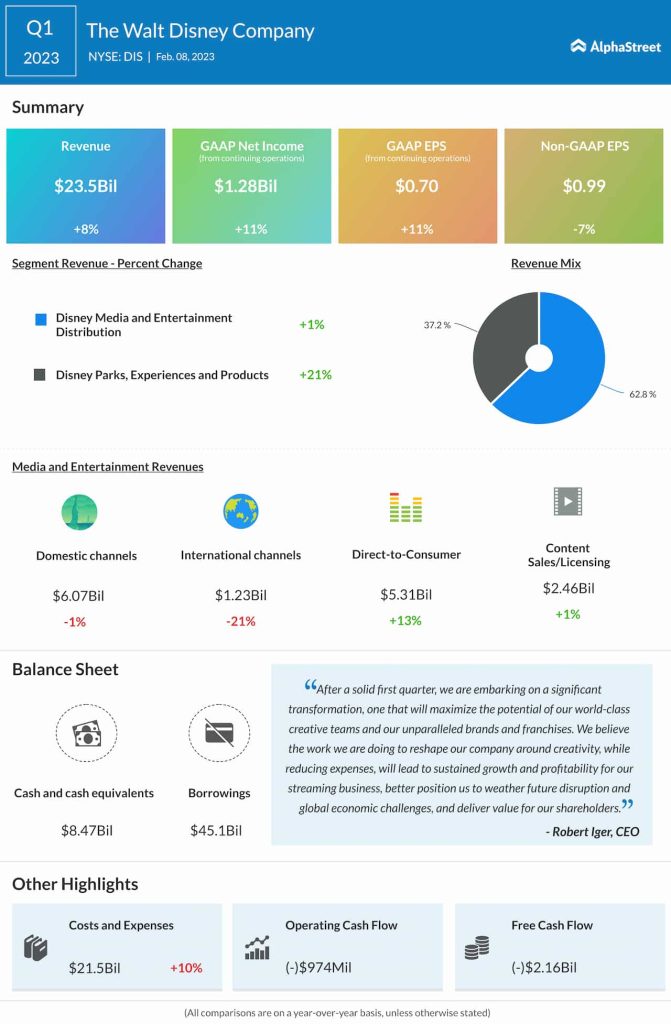
After making a crucial transition from linear TV to video streaming, The Walt Disney Company (NYSE: DIS) has embarked on a mission to reshape the business. The focus is on preparing the company to effectively deal with market challenges and economic uncertainties while delivering value to shareholders.
The entertainment behemoth’s stock experienced high volatility in recent years as the COVID-related business disruption and heavy investments in the direct-to-customer (DTC) business made investors take a cautious stance. The management’s bullish outlook on the streaming business, including Disney+, seems to be having a positive effect on investor sentiment, lately. The DTC segment is expected to achieve profitability by the end of 2024. The good news is that for Disney, an uptick in profits typically translates into higher share prices. So, it is unlikely to disappoint long-term investors in terms of returns.
Profitability
After recovering from the pandemic-era slump, the company’s earnings picked up steadily in recent quarters, aided by the management’s aggressive measures to boost profitability through measures like cost reduction. However, the heavy investment required to expand the direct-to-customer business, in the highly competitive streaming market, would put pressure on the company’s finances.
Q2 Report on Tap
Disney is preparing to publish second-quarter results on Man 10, after stock markets close. On average, analysts estimate that adjusted profit declined about 14% to $0.93 per share in the March quarter. The projected revenue is $21.8 billion, which is down 7.5% from last year.
Disney’s CFO Christine McCarthy said at the last earnings call: “Despite the impact of COVID, which had a significant adverse impact on the company’s free cash flow, our balance sheet is strong and supports ongoing investment in our businesses. We still expect cash content spending companywide to remain in the low $30 billion range for fiscal 2023. We also continue to invest in our parks and experiences globally, and in other capital projects across the enterprise, and expect that fiscal 2023 capital expenditures will total approximately $6 billion.”
Financials
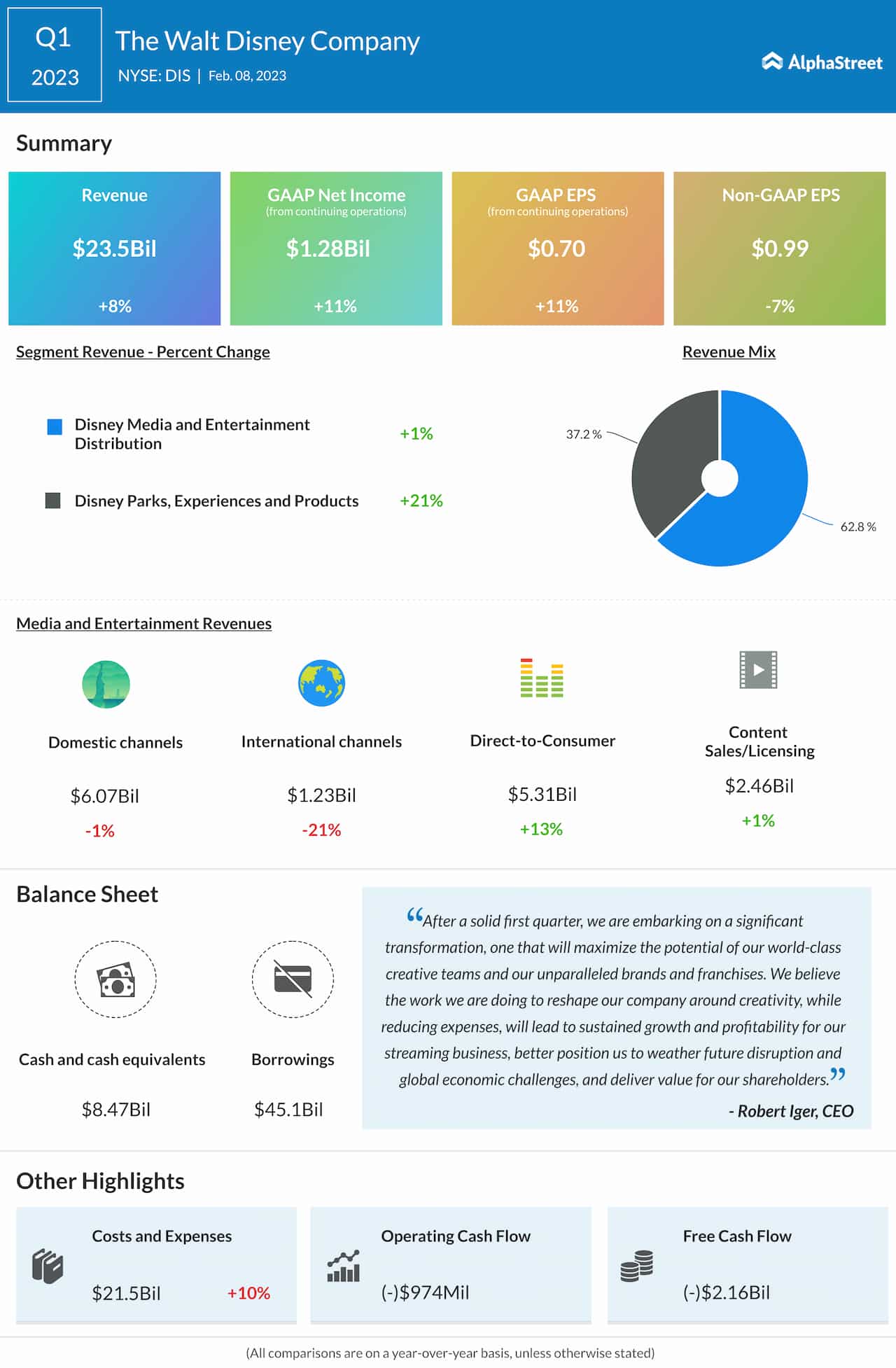
In the first quarter, earnings and revenues topped expectations, after missing the Street view in the preceding quarter. Both the Parks and Media segments registered growth in the first three months of fiscal 2023, though the former expanded only slightly. At $23.5 billion, total revenues were up 8% year-over-year. Meanwhile, net income, excluding special items, dropped 7% annually to $0.99 per share.
This week, Disney’s stock slipped below the $100 mark but it is trading close to the long-term average. The shares closed Thursday’s session sharply lower.