

Twilio Inc. (NYSE: TWLO) is scheduled to report third quarter 2019 earnings results on Wednesday, October 30, after the market closes. Analysts have forecast earnings of $0.01 per share, which compares to $0.07 per share reported in the prior-year period. Revenue is expected to increase 70% to $287.8 million.
Twilio’s topline numbers are expected to benefit from growth in active customers and the dollar-based expansion rate. Last quarter, active customers grew 182% to 161,869 customers while the dollar-based net expansion rate rose to 140% from 137% in the comparable prior-year period. However, the 6% sequential decline in the expansion rate raised concerns.
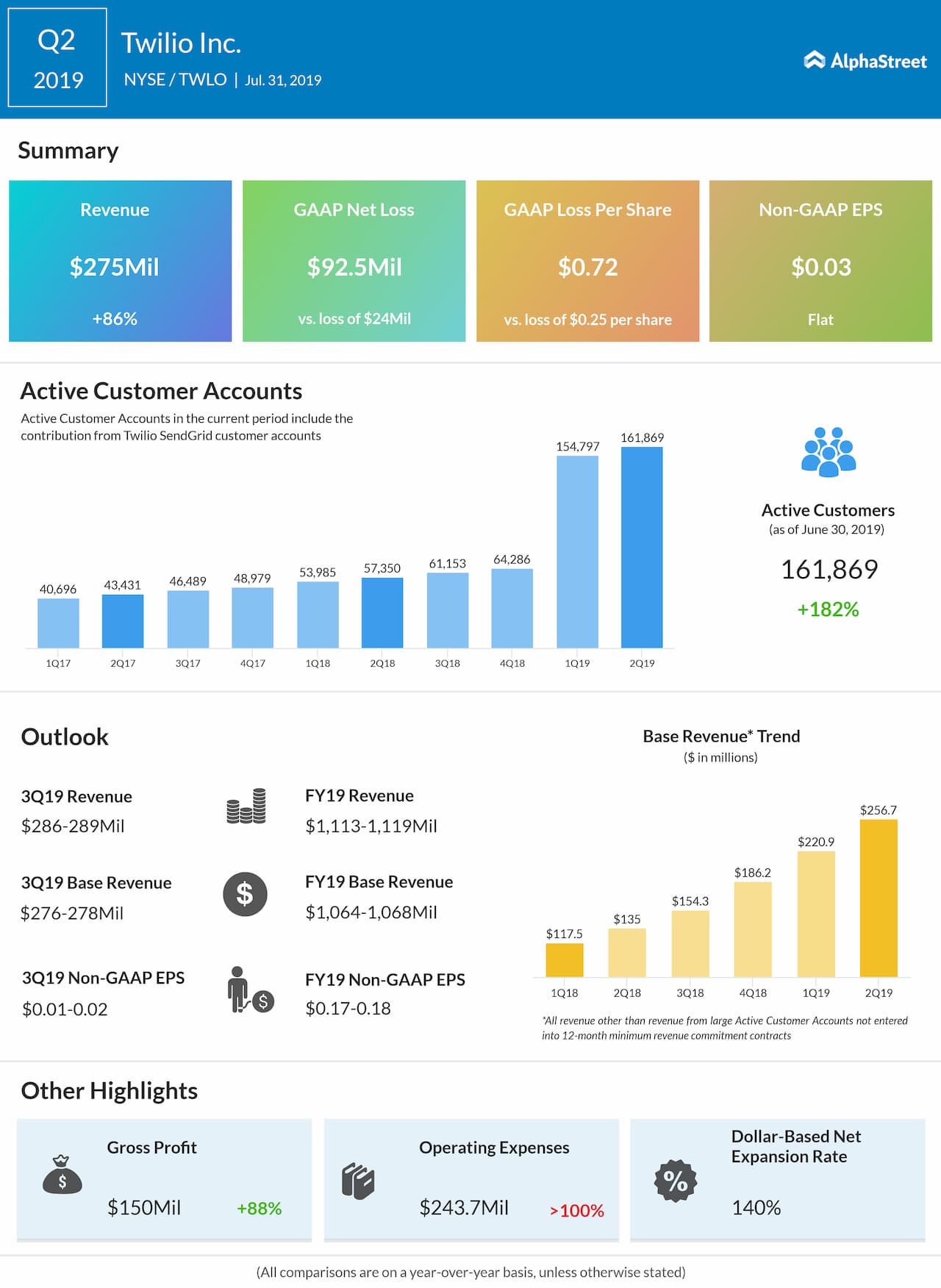
Another metric to watch is base revenues, which excludes revenues from customers who don’t have a 12-month contract with the company. This gives an idea of the number of large accounts with long-term contracts that would generate sustainable revenues. Last quarter, base revenues increased 90% year-over-year and 16% sequentially.
Twilio is also likely to benefit from the investments and acquisitions it has undertaken for the growth and expansion of the business. The second quarter numbers benefited from the SendGrid acquisition that closed in the first quarter. The addition of new products and features are also likely to give the company a boost.
However, increased investments in R&D and marketing are likely to lead to higher expenses which could put pressure on earnings. Last quarter, operating expenses doubled year-over-year to almost $244 million.
Also read: Twilio Q2 2019 Earnings Conference Call Transcript
In the second quarter of 2019, Twilio beat revenue estimates while adjusted EPS matched expectations. Revenues rose 86% to $275 million while adjusted EPS remained flat at $0.03.
For the third quarter of 2019, Twilio has guided for revenues of $286-289 million and adjusted EPS of $0.01 to $0.02. For fiscal year 2019, the company anticipates revenues of $1.113-1.119 billion and adjusted EPS of $0.17 to $0.18.
Twilio’s stock has dropped 29% from its 52-week high of $151 in June. This indicates caution on the part of investors as well as a slowdown after the high level of interest seen in the company’s new products early in the year.