
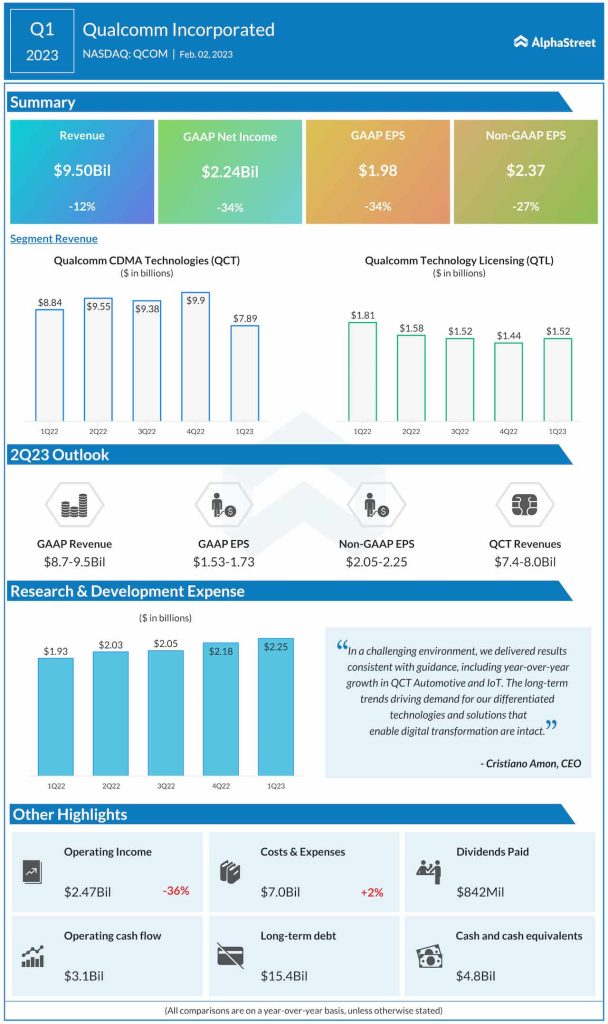
Like most technology companies, Qualcomm, Inc. (NASDAQ: QCOM) benefited from the COVID-driven digital transformation and high demand for smartphones, until recently. The chipmaker’s mixed first-quarter report has raised speculation about its performance this year, given the fading pandemic boom and economic uncertainties.
Mixed Performance
Qualcomm’s stock had a positive start to 2023 and gained about 25% since the beginning of the year. But it is yet to fully recover from the losses suffered last year, hurt by a widespread slowdown in smartphone sales — the company’s primary revenue source. However, the slump in Qualcomm’s business is cyclical in nature, and it is in line with the broad semiconductor industry. There will not be any significant improvement in the near term, but the full-year outlook on the company’s finances is positive, marked by a recovery in the second half.
QUALCOMM Incorporated Q1 2023 Earnings Call Transcript
Though the valuation is not very cheap, the current stock price offers a good entry point. There has been a steady increase in Qualcomm’s dividends over the years, and the stock currently offers a yield of 2.2%. While QCOM is forecast to make decent gains this year, it would depend on external conditions like inflationary headwinds and the COVID situation, especially in China.
From Qualcomm’s Q1 2023 earnings call:
“Given the current macroeconomic and demand environment, we’re implementing further spending reductions and streamlining operations without losing sight of the significant growth and diversification opportunities ahead. This is consistent with our commitment to actively manage operating expenses as indicated during our last earnings call. Combined with the actions we have already taken in the quarter we expect to reduce non-GAAP operating expenses by approximately 5% relative to our run rate exiting fiscal ’22.”

Road Ahead
Qualcomm’s strained relationship with its top customer Apple Inc (NASDAQ: AAPL) has been a major concern after the latter started producing its own chips, thereby reducing dependence on external suppliers. But Qualcomm supplies to many leading mobile companies other than Apple and has strengthened its non-smartphone business through continued diversification. The rapid penetration of 5G technology in mobile phones and other telecom systems and growing chip demand in the automotive sector are among the main tailwinds for the company.
Earnings: Highlights of Intel’s Q4 2022 financial results
In the first quarter, both the CDMA Technologies and Licensing businesses contracted, driving revenues down by 12% year-over-year to $9.5 billion. As a result, adjusted net income fell 27% to $2.37 per share. The top line missed the consensus forecast, while earnings topped expectations. The bottom line had missed in the previous quarter, after consistently beating for more than seven years.
Demand Recovery
Meanwhile, Licensing revenues increased sequentially. That, together with the year-over-year growth in QCT Automotive and IoT, points to a potential demand recovery this year. Of late, the company has been focusing more on the non-core areas of the business, but the mobile handset market still accounts for nearly two-thirds of its revenues. That means, Qualcomm’s sales and margins would remain under pressure until the smartphone market fully recovers.
After making steady gains since early January, Qualcomm shares are currently trading above their one-year average. The post-earnings momentum continued on Tuesday, and the stock traded up 3% in the afternoon.